What Is the Easiest Insurance License to Get in Florida?
Interested in starting an insurance career but worried about taking a difficult state licensing exam? You are not alone. Many aspiring insurance professionals want a practical way to enter the industry without spending months preparing for a high-stakes test.
The good news is that Florida offers licensing pathways that may allow qualified applicants to enter the insurance industry without taking the traditional state licensing exam.
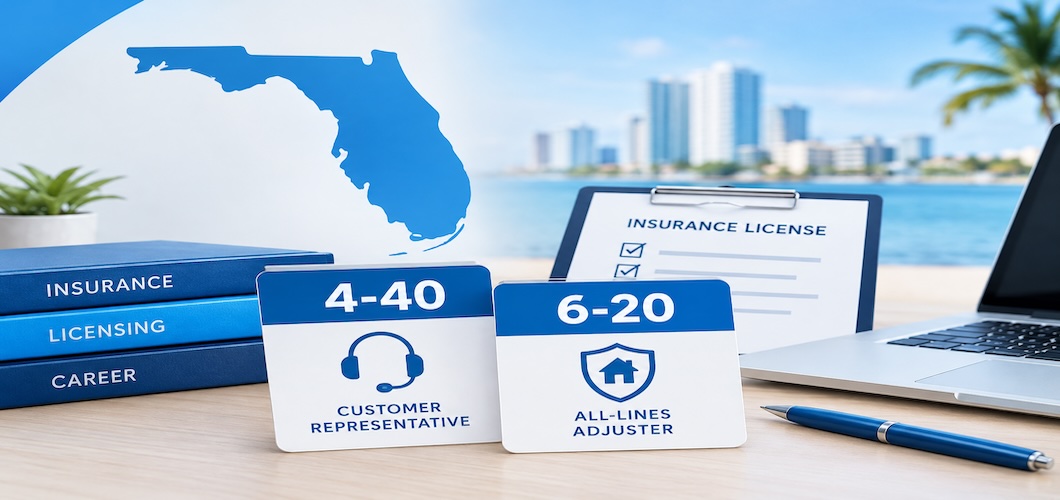
Two options worth exploring are the 4-40 Customer Representative license and the 6-20 All-Lines Adjuster license. Both can open doors to insurance careers, but they serve different purposes. The 4-40 is designed for customer service and support work within a property and casualty insurance agency, while the 6-20 focuses on investigating and evaluating insurance claims.
So, what is the easiest insurance license to get in Florida? The answer depends on your career goals, qualifications, and the type of work you want to do.
Understanding Florida's Insurance Licensing Options
Florida has several insurance license types, each designed for specific responsibilities. Some require applicants to complete pre-licensing education and pass a state examination. Others offer qualifying designation-based or alternative pathways.
For beginners who want to avoid a traditional state licensing exam, the 4-40 and 6-20 are worth investigating.
Completing OLT's 40 hr Registered Customer Service Representative Designation Course (4-40 RCSR) or 40 hr All Lines Accredited Claims Adjuster (6-20) Designation Course will exempt you from the state exam.
Let's look at how each option works.
1. Florida 4-40 Customer Representative License
The Florida 4-40 Customer Representative license is an attractive starting point for people interested in working in an insurance agency. It is particularly suitable for individuals who enjoy helping customers, explaining insurance options, organizing policy information, and supporting an agency's daily operations.
Unlike a broader General Lines agent license, the 4-40 is designed around a supervised, salaried agency role.
What Are the Requirements for a Florida 4-40 License?
Applicants generally must meet the following requirements:
- At least 18 years old
- A United States citizen or legal alien who possesses a work authorization from the United States Immigration and Naturalization Services
- A resident of the state of Florida OR a resident of another state sharing a common boundary with this state and has been employed in this state for a period of not less than 6 months by a Florida licensed and appointed general lines agent
- Satisfy the Department's requirements for an approved qualifying designation, educational pathway, or other applicable eligibility route (our course satifies this requirement)
- Submit the required application and fees and satisfy any other applicable licensing requirements
Applicants should verify the current requirements before enrolling in a course.
Does the 4-40 License Require a State Exam?
A qualifying 4-40 pathway, our 40 hr Registered Customer Service Representative Designation Course (4-40 RCSR), can allow an applicant to obtain the license without taking the traditional state licensing examination.
This is a significant advantage for people who prefer structured coursework and practical career preparation over a separate state exam.
However, completing a course alone does not automatically guarantee licensure. Applicants must complete the appropriate qualifying pathway and meet the remaining FLDFS requirements.
What Does a 4-40 Customer Representative Do?
A 4-40 license is intended for a salaried employee working under a licensed and appointed General Lines agent. Depending on the employer and assigned duties, responsibilities may include:
- Helping customers with automobile, homeowners, motorcycle, watercraft, and other eligible personal insurance needs.
- Assisting with insurance applications, quotes, and policy changes within the license's authorized scope.
- Answering questions about coverage and policy documentation.
- Helping customers with renewals and routine service requests.
- Maintaining accurate customer and policy records.
- Supporting licensed agents with daily agency operations.
The license has defined limits. A 4-40 Customer Representative is not a substitute for a General Lines agent and cannot independently perform every activity reserved for a more broadly licensed insurance professional.
What Careers Can You Pursue With a 4-40 License?
A 4-40 can help you pursue opportunities such as:
- Insurance customer service representative
- Personal lines customer service specialist
- Insurance account service representative
- Policy service representative
- Agency support professional
- Insurance office customer service specialist
Many of these positions emphasize communication, organization, problem-solving, and customer care.
The 4-40 may be particularly appealing if you want to work in a professional office environment, develop insurance industry knowledge, and build experience while earning a salary.
Is the 4-40 a Good Choice for Beginners?
For someone who wants to begin working in an insurance agency in a supervised customer service role, the 4-40 may be the more straightforward fit.
It is designed for supervised customer service work, and its qualifying pathways can eliminate the need for a traditional state licensing exam.
It is especially worth considering if you prefer working with customers and insurance policies rather than investigating property damage and evaluating claims.
2. Florida 6-20 All-Lines Adjuster License
If you are more interested in investigating insurance claims than working in an agency's customer service department, the Florida 6-20 All-Lines Adjuster license may be a better fit.
Insurance adjusters help determine the amount of covered loss payable under an insurance policy. They review claim information, investigate reported damage, examine documentation, and evaluate claims according to the applicable policy terms and insurance laws.
Florida's 6-20 license can support career opportunities in company and independent adjusting, subject to the appropriate appointment and other requirements.
What Are the Requirements for a Florida 6-20 License?
Applicants generally must:
- At least 18 years old
- A resident of the State of Florida
- A United States citizen or legal alien who possesses a work authorization from the United States Immigration and Naturalization Services
- Not hold a resident license in another state, subject to applicable licensing rules
- Satisfy the Department's requirements for an approved qualifying designation, educational pathway, or other applicable eligibility route (our course satifies this requirement)
- Submit the required application and fees and satisfy any other applicable licensing requirements
Does the 6-20 License Require a State Exam?
Not always.
A qualifying 6-20 pathway, our 40 hr All Lines Accredited Claims Adjuster (6-20) Designation Course, will exempt you from the state exam.
What Does a 6-20 All-Lines Adjuster Do?
Adjusters investigate and evaluate insurance claims involving covered property and casualty losses. Typical responsibilities can include:
- Reviewing claims and insurance policy provisions.
- Investigating reported losses and gathering relevant documentation.
- Inspecting property damage when required.
- Photographing damage and preparing claim reports.
- Estimating repair costs and evaluating supporting estimates.
- Communicating with policyholders, contractors, and other parties.
- Applying policy terms and applicable insurance requirements when evaluating covered losses.
The exact duties depend on the employer, appointment, claim type, and applicable law.
What Careers Can You Pursue With a 6-20 License?
A 6-20 can support several different adjusting career paths, including:
Company Employee Adjuster
Works for an insurance company to investigate and evaluate claims on the insurer's behalf.
Independent Adjuster
Works through an adjusting firm or another permitted arrangement to handle claims on behalf of insurance companies.
Catastrophe Claims Adjuster
May involve assignments related to hurricanes, severe storms, and other major loss events, depending on the employer and appointment.
Claims Specialist
Develops expertise in particular claim types, property losses, documentation, or claims processes.
Experienced Claims Professional
May pursue advanced claims responsibilities, supervisory opportunities, or additional industry credentials over time.
A license does not guarantee employment or a particular salary. Many adjusting positions also require practical training, experience, travel, or employer-specific qualifications.
Is the 6-20 a Good Choice for Beginners?
The 6-20 may be a strong option for someone who enjoys investigation, analytical work, documentation, and evaluating property damage.
It can also appeal to people who want to explore independent adjusting or catastrophe claims work.
However, claim adjusting can involve demanding deadlines, detailed policy analysis, field inspections, and periods of increased workload after severe weather events. It may be less suitable for someone who prefers a predictable customer service role.
3. 4-40 vs. 6-20: Which Florida Insurance License Is Easier?
Both licenses can offer qualifying pathways that avoid the traditional state licensing exam, but they lead to different types of work.
| Feature | 4-40 Customer Representative | 6-20 All-Lines Adjuster |
|---|---|---|
| Main focus | Agency customer service | Insurance claims |
| Typical work setting | Insurance agency or office | Insurer, adjusting firm, field, or office |
| Main responsibilities | Customer support and policy service | Investigating and evaluating claims |
| Exam exemption | Available through qualifying pathways | Available through qualifying pathways |
| Work structure | Salaried, supervised agency employment | Depends on employer and appointment |
| Potential entry-level path | Customer service or agency support | Claims trainee or adjusting pathway, subject to employer requirements |
| Best fit | People-oriented and service-focused | Analytical and investigation-focused |
Which One Is the Easiest?
If your goal is to begin working in an insurance agency in a supervised customer service role, the 4-40 is often the more straightforward fit.
If you prefer evaluating damage, investigating losses, and pursuing claims work, the 6-20 may better match your interests.
Neither license is universally easier to obtain. The most accessible path depends on your qualifications and the applicable licensing route. Both require careful attention to Florida's rules, and both can involve coursework or other qualifying requirements.
4. Can You Start an Insurance Career Without a College Degree?
Yes. A traditional four-year college degree is not a universal prerequisite for either of these career paths.
Florida's qualifying pathways allow eligible applicants to pursue a 4-40 or 6-20 through approved insurance education or designations rather than a college degree.
This can make insurance worth exploring for:
- High school graduates entering the workforce.
- College students considering a professional career.
- Adults changing careers.
- Professionals looking for a new direction.
- People who prefer career-focused training over a lengthy degree program.
The key is choosing the correct license pathway and completing the requirements for that particular license.
5. How to Get Started With a Florida Insurance License
If you are ready to explore your options, follow these steps.
Step 1: Choose the Type of Work You Want to Do
Consider whether you prefer customer service and agency operations or investigating and evaluating insurance claims.
Step 2: Verify Your Qualifying Pathway
Review the current FLDFS requirements for the 4-40 or 6-20. Confirm which designations, courses, credentials, or exemptions apply to your situation.
Step 3: Complete the Required Education or Designation
Enroll in an appropriate course or designation program that meets FLDFS current requirements.
Step 4: Submit Your License Application
Complete the required application, pay applicable fees, arrange fingerprinting when required, and submit any supporting documentation.
Step 5: Meet All Remaining Licensing Requirements
Follow the FLDFS instructions, resolve any outstanding application requirements, and confirm that your license has been issued. Complete any appointment requirements applicable to your intended work.
Step 6: Start Exploring Career Opportunities
For a 4-40, look at insurance agencies seeking customer service and policy support employees. For a 6-20, research insurers and adjusting firms that hire entry-level claims professionals and provide training.
Start Your Florida Insurance Career With OLT
You do not necessarily need a college degree or a traditional state licensing exam to begin exploring a career in Florida's insurance industry. The 4-40 Customer Representative and 6-20 All-Lines Adjuster pathways may offer practical options for qualified applicants.
The right choice depends on how you want to work. If you enjoy helping people and supporting an insurance agency, investigate the 4-40 pathway. If you prefer claims investigation and loss evaluation, explore the 6-20 and its qualifying designation options.
OnLine Training (OLT) helps aspiring insurance professionals explore Florida licensing education and prepare for their next career step.
Ready to get started? Visit OLT's Florida insurance pre-licensing course catalog to explore available courses and find the educational pathway that fits your goals.
Your insurance career can start with one practical step. Take it today with OLT.
Licensing requirements, approved designations, and exemptions can change. Verify your eligibility and the current requirements directly with the Florida Department of Financial Services before enrolling or applying.
Check out these articles to learn more:
What Is a 4-40 License in Florida? CSR Role, Salary, and Upgrade OptionsFlorida 6-20 License: Requirements, Exam & Career Paths
Florida Insurance License Requirements: A Complete 2026 Guide