Florida 2-15 vs. 8-15 Insurance License: What's the Difference?
Are you researching Florida insurance licenses and wondering whether you need a 2-15 or an 8-15? Although these license numbers look similar, the most important difference comes down to one question: Are you a Florida resident or a licensed insurance professional who lives in another state?
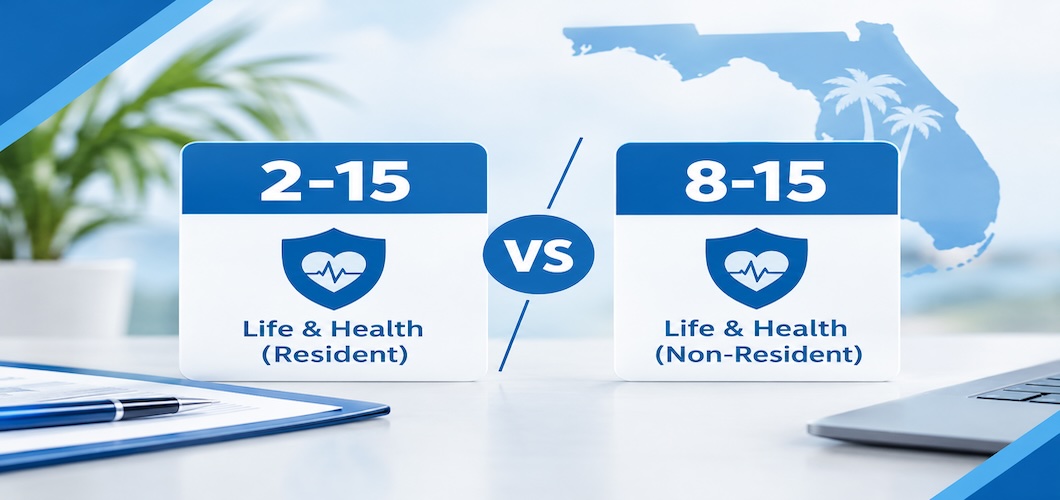
Both the Florida 2-15 and 8-15 licenses cover Health and Life insurance, including annuities and variable contracts, subject to the applicable licensing authority and requirements. The 2-15 is the resident license, while the 8-15 is the non-resident license.
Understanding this distinction can help you avoid unnecessary coursework, choose the appropriate licensing path, and move toward your insurance career more efficiently.
If you're ready to take the next step, explore OLT's Florida insurance pre-licensing courses to find the education that fits your goals.
What Is the Florida 2-15 Insurance License?
The 2-15 Resident Health & Life Insurance Agent License, officially known as the Health & Life license including annuities and variable contracts, is designed for eligible Florida residents who want to pursue careers in life and health insurance.
This license provides a broad foundation for working with life insurance, health insurance, and certain annuity products within the scope of the license and any other applicable requirements.
What Can You Do With a 2-15 License?
Depending on your appointments, employer, product authorizations, and any additional registrations required, a 2-15 license may support opportunities in areas such as:
- Life insurance: Help individuals and families evaluate life insurance options to protect their loved ones
- Health insurance: Work with eligible health insurance products and help clients understand their coverage options
- Medicare-related insurance: Pursue qualifying opportunities involving Medicare-related insurance products, subject to additional applicable requirements
- Employee benefits: Explore roles involving health coverage and benefits education for individuals and businesses
- Annuities: Work with authorized annuity products within the scope of your license and applicable regulations
- Insurance agency sales: Build client relationships, develop a book of business, and pursue sales or agency opportunities
For someone who wants to establish an insurance career in Florida, the 2-15 can be an attractive option because it combines life and health insurance authority rather than focusing on only one of those areas.
What Is the Florida 8-15 Insurance License?
The 8-15 Non-Resident Health & Life Insurance Agent License is the non-resident counterpart to Florida's 2-15 license.
It is intended for eligible insurance professionals who are not Florida residents and who meet Florida's non-resident licensing requirements. Applicants generally must already hold the corresponding lines of authority in their home state.
A non-resident Florida license is not a substitute for obtaining a resident license in your home state. Instead, it allows eligible professionals to seek authority in Florida while maintaining their home-state residency and licensing status.
Who Might Need an 8-15 License?
The 8-15 may be relevant for:
- Life and health insurance agents who live outside Florida and want to conduct authorized insurance business in Florida
- Insurance professionals who serve clients across state lines
- Agents who relocate their business activities into additional states without becoming Florida residents
- Eligible insurance professionals expanding into the Florida market while retaining their resident license in another state
For example, an insurance agent who lives in North Carolina and holds the appropriate home-state life and health authority may explore obtaining a Florida non-resident license to conduct authorized business in Florida. The agent must satisfy Florida's applicable eligibility, application, and other licensing requirements.
Important: Florida's 8-15 license is not an insurance analyst license. It is the non-resident Health & Life license, including annuities and variable contracts. Always verify the official license classification before enrolling in a course or submitting an application.
2-15 vs. 8-15: Side-by-Side Comparison
| Feature | Florida 2-15 | Florida 8-15 |
|---|---|---|
| Official classification | Resident Health & Life | Non-Resident Health & Life |
| Who it is for | Eligible Florida residents | Eligible residents of other states |
| Home-state license | Must satisfy Florida resident licensing requirements | Must hold the corresponding lines of authority in the home state |
| Insurance authority | Life and health, including annuities and variable contracts, within the license's scope | Corresponding life and health authority, subject to home-state authority and Florida requirements |
| Pre-licensing education | Typically a 60-hour approved course for the standard education pathway, unless another qualifying pathway applies | Generally based on existing home-state licensure and Florida non-resident requirements |
| State examination | Required unless an applicable exemption or alternative qualification applies | Generally does not require repeating the Florida resident pre-licensing examination when qualifying for non-resident licensure |
| Primary purpose | Establish resident life and health insurance authority in Florida | Extend eligible life and health insurance authority into Florida from another state |
Licensing requirements depend on the applicant's circumstances and current Florida Department of Financial Services rules. Verify your eligibility before enrolling or applying.
Which License Should You Choose?
Choose the 2-15 If You Live in Florida
If you are a Florida resident entering the insurance industry, the 2-15 is generally the relevant license to investigate if you want to work with both life and health insurance.
The resident licensing process typically includes completing an approved pre-licensing education requirement, submitting the appropriate application, satisfying fingerprinting and other eligibility requirements, and passing the state examination unless you qualify for an exemption or another approved pathway.
Completing your education is an important early step. A structured online course lets you study at your own pace and review material as you prepare for the licensing process.
Choose the 8-15 If You Live Outside Florida
If you already live and hold an appropriate insurance license in another state, the 8-15 may be the relevant Florida license to investigate when expanding your business into the state.
Before applying, confirm that your home-state license includes the necessary lines of authority and that you meet Florida's non-resident requirements. Your authority to transact variable annuities in Florida, in particular, depends on the applicable authority you hold in your home state and Florida's rules.
If you are moving to Florida permanently, your circumstances may call for a resident license rather than a non-resident license. Review the requirements with the Florida Department of Financial Services before deciding which application to submit.
Can You Sell Both Life and Health Insurance With These Licenses?
Both license classifications relate to life and health insurance, including annuities and variable contracts. However, a license does not automatically authorize every activity involving every financial product.
Your permitted activities depend on the license's scope, appointments, product-specific requirements, and any additional registrations or qualifications required by law.
For example, certain variable products may require securities registration in addition to the appropriate insurance authority. Likewise, selling Medicare-related products may involve additional federal and carrier-specific requirements.
If your goal is to pursue a broad life and health insurance career, understanding these distinctions early can help you choose appropriate education and avoid assuming that one credential automatically covers every product or activity.
How to Get Started With a Florida 2-15 License
For eligible Florida residents following the standard education route, the process generally includes the following steps:
- Confirm your eligibility. Review Florida's current resident licensing requirements, including age, residency, and other qualifications.
- Complete approved pre-licensing education. The standard 2-15 education pathway generally requires a 60-hour approved covering life, health, and variable annuity insurance.
- Submit your application. Follow the Florida Department of Financial Services' instructions and satisfy applicable application, fingerprinting, and fee requirements.
- Prepare for the state examination. Review the examination requirements that apply to your circumstances and schedule the required examination if applicable.
- Complete the remaining licensing requirements. Confirm that all required steps are satisfied before conducting insurance business.
For more information about getting a 2-15 license review the article, Florida 2-15 Life & Health License: Steps, Exam & Costs. Applicants who already hold a license in another state should review the separate non-resident requirements rather than automatically following the resident 2-15 process.
Explore the Florida 2-15 Life & Health prelicensing course and start working toward your insurance career.
Build your foundation with Florida approved online insurance education from OLT.
Enroll in the 60 hour Florida approved 2-15 Course today!Why Choose OLT for Your Insurance Education?
Getting started in insurance does not have to mean putting your existing responsibilities on hold. OLT provides online insurance education designed to help students work toward their professional goals while balancing work, family, and other commitments.
Whether you are beginning a new career, building on previous professional experience, or exploring opportunities in life and health insurance, choosing appropriate education is an important first step.
With online learning, you can study on a schedule that works for you and revisit course material as needed. Before enrolling, make sure the course matches the license you intend to pursue and the requirements that apply to your situation.
Ready to explore your options? Visit the OLT insurance pre-licensing catalog to review available courses and take the next step toward your insurance career.
VIEW OLT'S FLORIDA-APPROVED INSURANCE PRE-LICENSING COURSES AND ENROLL TODAY!
Frequently Asked Questions About Florida's 2-15 and 8-15 Licenses
Is the 2-15 the same as the 8-15 license?
No. Both cover Health & Life insurance, including annuities and variable contracts, but the 2-15 is the resident license and the 8-15 is the non-resident license.
Do I need a 2-15 license if I already have a life and health license in another state?
Not necessarily. If you live outside Florida and hold the corresponding lines of authority in your home state, you may qualify for Florida's 8-15 non-resident license. Your eligibility depends on Florida's current requirements and the authority held in your home state.
Does the Florida 8-15 require the same pre-licensing course as the 2-15?
The standard resident 2-15 pathway generally requires a 60-hour approved pre-licensing course. The 8-15 follows non-resident licensing requirements and generally relies on qualifying home-state licensure rather than the standard Florida resident education and examination pathway. Verify your specific eligibility with Florida DFS.
Can I obtain an 8-15 license if I live in Florida?
The 8-15 is intended for non-residents. If Florida is your state of residence, the resident licensing 2-15 pathway is generally the one to investigate.
Does the 2-15 license allow me to sell life insurance and health insurance?
Yes. The 2-15 is Florida's combined resident Health & Life license, including annuities and variable contracts, subject to its scope and applicable additional requirements.
Where can I find official Florida insurance licensing requirements?
Visit the Florida Department of Financial Services' license qualifications page for official license classifications, eligibility rules, and application guidance.
Start Your Insurance Career With the Right License
The difference between Florida's 2-15 and 8-15 licenses is primarily residency and the licensing pathway that applies to you. The 2-15 is generally the starting point for eligible Florida residents pursuing broad life and health insurance authority, while the 8-15 is intended for eligible non-resident insurance professionals who already hold the corresponding authority in their home state.
Taking the time to identify the right license before enrolling can help you focus your efforts on the education and requirements that match your goals.
Take the first step today. Explore online insurance education from OLT and find the course that fits your Florida licensing plans.
EXPLORE OLT'S INSURANCE PRE-LICENSING COURSES
Licensing information is provided for general educational purposes and is not legal or regulatory advice. Requirements may change. Always confirm current eligibility, education, examination, and application requirements with the Florida Department of Financial Services before proceeding.