Florida 70-20 vs. 7-20 vs. 6-20 Adjuster License: What's the Difference?
If you are researching how to become an insurance claims adjuster in Florida, you may quickly encounter three license numbers that look remarkably similar: 6-20, 7-20, and 70-20.
Although all three are associated with all-lines adjusting, they are not interchangeable. The major distinction is where the adjuster lives and whether the adjuster already holds a resident adjuster license in another state.
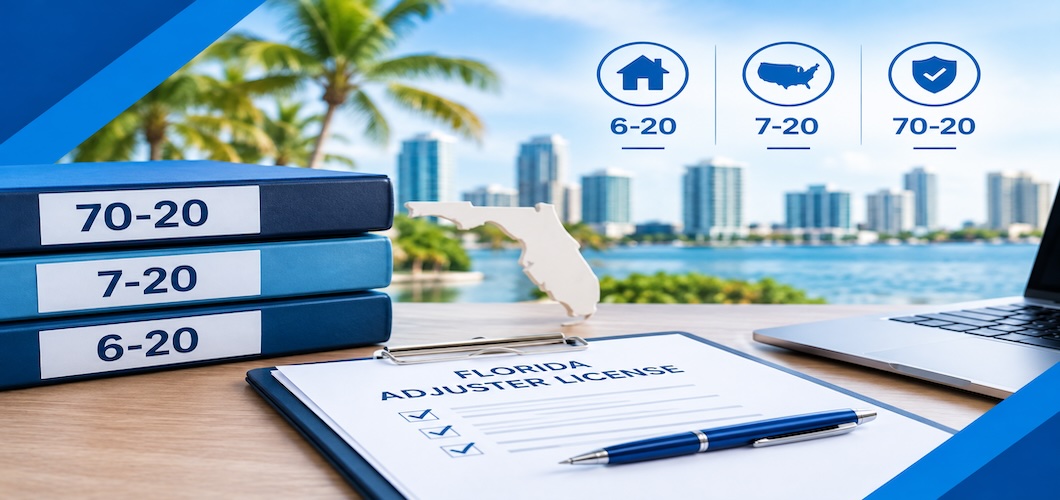
Florida's current licensing structure identifies:
- 6-20: Resident All-Lines Adjuster
- 7-20: Non-Resident All-Lines Adjuster
- 70-20: Non-Resident Designated Home State (DHS) Adjuster
Understanding that distinction before enrolling in training can save you time and help you pursue the license that actually fits your situation.
Quick Comparison: 6-20 vs. 7-20 vs. 70-20
| License | License Type | Who It Is For | Florida Residency |
|---|---|---|---|
| 6-20 | Resident All-Lines Adjuster | Florida residents | Resident of Florida |
| 7-20 | Non-Resident All-Lines Adjuster | Adjusters who are residents of another state and qualify for Florida's nonresident license | Not a Florida resident |
| 70-20 | Non-Resident Designated Home State Adjuster | Qualifying nonresidents without a resident adjuster license, including certain company adjusters | Not a Florida resident |
The Florida Department of Financial Services lists the 6-20 and 7-20 as resident and nonresident versions of the All-Lines Adjuster license, while the 70-20 is separately identified as the All-Lines Designated Home State license.
What Is the Florida 6-20 Adjuster License?
The 6-20 Resident All-Lines Adjuster License is generally the license Florida residents pursue when they want to work as an all-lines insurance adjuster.
Florida's Department of Financial Services identifies the 6-20 as the resident version of the all-lines adjuster license.
An all-lines adjuster is authorized to adjust all lines of insurance except life and annuities. That broad scope can make the 6-20 a versatile credential for people interested in insurance claims careers.
Who Is the 6-20 Designed For?
The 6-20 is primarily designed for individuals who:
- Are Florida residents
- Are at least 18 years old
- Meet Florida's citizenship or work-authorization requirements
- Do not hold a resident license in another state
- Meet Florida's licensing qualification requirements
Depending on the applicant's qualifications, Florida provides several paths toward an adjuster license, including qualifying professional designations and other approved routes. Applicants who do not qualify through an exemption route may need to pass the applicable Florida examination.
What Can a 6-20 Adjuster Do?
The all-lines designation provides a broad foundation for claims work. Depending on employment, appointments, and the type of claims being handled, an adjuster may work with property, casualty, automobile, workers' compensation, and other lines covered by the all-lines scope.
This can make the 6-20 attractive to people who want flexibility in their insurance adjusting career.
What Is the Florida 7-20 Adjuster License?
The 7-20 Non-Resident All-Lines Adjuster License is designed for people who are not Florida residents but want a Florida all-lines adjuster license.
Unlike the 6-20, the 7-20 is a nonresident license.
Florida's licensing requirements provide routes involving an adjuster's license in another state with which Florida has a reciprocal arrangement. Depending on the applicant's circumstances, an equivalent examination or other qualifying credential may affect whether a Florida examination is required.
Who Might Need a 7-20?
A 7-20 may be appropriate for an adjuster who:
- Lives outside Florida
- Already holds an appropriate resident adjuster license in another state
- Wants to obtain Florida authority as a nonresident adjuster
- Meets Florida's nonresident licensing requirements
Florida maintains a reciprocity system for nonresident all-lines adjusters. Depending on the applicant's home state and circumstances, reciprocity can affect examination and continuing education requirements.
What Is the Florida 70-20 Adjuster License?
The 70-20 Non-Resident Designated Home State Adjuster License is different from the standard 7-20 nonresident license.
The 70-20 is designed for qualifying nonresidents who use Florida as their Designated Home State.
According to the Florida Department of Financial Services, the 70-20 DHS license is available to individuals who are residents of a state that does not license adjusters. It can also apply to certain company adjusters who live in a state that licenses only independent adjusters and want to designate Florida as their home state.
Who Might Need a 70-20?
The 70-20 may be appropriate for someone who:
- Is not a Florida resident
- Does not have a valid resident adjuster license in another state
- Lives in a state that does not license adjusters, or otherwise meets Florida's DHS criteria
- Wants to qualify Florida as a designated home state
- Meets Florida's 70-20 licensing requirements
This makes the 70-20 particularly important for adjusters who work across state lines but do not have a traditional resident adjuster license available in their home state.
6-20 vs. 7-20: What's the Difference?
The easiest way to remember the difference is:
6-20 = Florida resident.
7-20 = Florida nonresident.
Both are all-lines adjuster licenses, but the applicant's residency status is the major distinction.
If you live in Florida and meet the resident licensing requirements, the 6-20 is generally the relevant license.
If you live in another state and already have the appropriate resident adjuster license there, the 7-20 may be the Florida license you need.
7-20 vs. 70-20: Why the Difference Matters
This is where many aspiring adjusters become confused.
Both licenses are for people who are not Florida residents, but they are designed for different situations.
The 7-20 is the standard Non-Resident All-Lines Adjuster License. It is commonly associated with adjusters who maintain an appropriate resident adjuster license in another state and seek Florida nonresident authority.
The 70-20 is the Designated Home State Adjuster License. It is intended for qualifying nonresidents who do not have a resident adjuster license in another state and meet Florida's DHS requirements.
Florida specifically states that its standard nonresident adjuster reciprocity information does not apply to the 70-20 DHS license. That is an important distinction when researching licensing and continuing education requirements.
6-20 vs. 70-20: Which One Do You Need?
The answer generally starts with one question:
Are you a Florida resident?
If yes, the 6-20 resident all-lines license is generally the relevant path.
If no, the next question is whether you already hold a resident adjuster license in another state.
- Florida resident: Look at the 6-20.
- Nonresident with a qualifying home-state adjuster license: Look at the 7-20.
- Nonresident without a resident adjuster license who meets DHS requirements: Look at the 70-20.
Because individual circumstances can affect eligibility, applicants should review the current Florida Department of Financial Services requirements before applying.
Do All Three Licenses Have the Same Adjuster Scope?
The three license numbers differ primarily in residency and licensing status, rather than representing three completely different claims specialties.
Florida law provides that an all-lines adjuster license qualifies the licensee to adjust all lines of insurance except life and annuities.
That broad scope is one reason all-lines licensing is attractive to people who want to pursue different types of claims work over the course of their careers.
What About Independent vs. Company Adjusters?
Your license number does not necessarily determine whether you work as an independent or company adjuster.
A company adjuster generally works as an employee of an insurer or qualifying insurer-affiliated organization.
An independent adjuster may work for an independent adjusting firm or operate independently while handling claims on behalf of insurers.
The 6-20, 7-20, and 70-20 classifications should therefore not be confused with the type of employment arrangement you choose.
Your license establishes your regulatory authority; your employer, appointments, and business arrangement determine how you may perform your work.
Which License Is Best for Catastrophe Adjusters?
Catastrophe adjusting is one of the career paths that attracts people to all-lines licensing.
CAT adjusters may travel to areas affected by hurricanes, severe storms, wildfires, hail, flooding, or other major events to help insurers process large volumes of claims.
For a Florida resident interested in adjusting, the 6-20 can provide a broad all-lines foundation.
For an out-of-state adjuster, the appropriate Florida license may instead be a 7-20 or, if the individual qualifies, a 70-20 DHS license.
The key is not simply choosing the license that sounds best. It is choosing the license that matches your residency and existing licensing situation.
What About Continuing Education?
Maintaining an adjuster license does not end when the license is issued.
Florida requires adjusters to meet continuing education requirements. Florida also has specific reciprocity rules for certain nonresident adjusters.
One important difference is that Florida's CE reciprocity provisions for nonresident all-lines adjusters do not apply to the 70-20 DHS license. Florida states that DHS licensees must complete Florida's continuing education requirements.
For current requirements, licensees should monitor their Florida Department of Financial Services MyProfile account and the Department's current education guidance.
Can You Hold More Than One Florida Adjuster License?
Another important point for new adjusters is that Florida's licensing structure does not simply allow an individual to collect multiple adjuster licenses for different purposes.
Florida law places restrictions on adjuster licensing, including provisions concerning limited licenses and the issuance of new or additional licenses. The current Florida licensing system is centered on the resident 6-20, nonresident 7-20, DHS 70-20, emergency adjuster, and public adjuster classifications.
Before applying for another license, check your existing license status and the current Florida requirements.
Which License Should You Pursue?
Use this simple decision framework:
Are you a Florida resident?
YES → The 6-20 Resident All-Lines Adjuster License is generally the relevant license.
NO → Continue.
Do you hold a resident adjuster license in another state?
YES → The 7-20 Non-Resident All-Lines Adjuster License may be the appropriate Florida license, subject to Florida's requirements and reciprocity rules.
NO → Continue.
Does your situation qualify for Florida's Designated Home State requirements?
YES → The 70-20 Non-Resident DHS Adjuster License may be the appropriate route.
NO → Review your individual licensing options with the Florida Department of Financial Services.
Why Understanding the Difference Matters Before You Enroll
Searching for an "all-lines adjuster course" can produce information about several different Florida license numbers. That can make it difficult to determine which course or licensing path actually applies to you.
Before enrolling, determine:
- Where you maintain your legal residence
- Whether your home state licenses insurance adjusters
- Whether you already hold a resident adjuster license
- Whether you qualify for a designation or examination exemption
- Whether Florida reciprocity applies to your situation
- Which Florida license classification you actually need
Starting with the correct license classification can make the licensing process much easier to understand.
Build Your Florida Adjuster Knowledge With OnLine Training
Whether you are pursuing an insurance adjusting career for the first time or adding Florida to your professional licensing portfolio, understanding the difference between the 6-20, 7-20, and 70-20 is an important first step.
Once you know which licensing path fits your circumstances, the next step is preparing for the education, examination, and licensing requirements that apply to you.
Ready to Start Your Adjuster Career?
OLT offers Florida insurance education designed to help you build the knowledge you need for your licensing and continuing education goals. The licenses may be different but the course requirement for the 6-20, 7-20, 70-20 is the same!
Frequently Asked Questions
What is the difference between a 6-20 and 7-20 adjuster license in Florida?
The 6-20 is Florida's resident all-lines adjuster license, while the 7-20 is Florida's nonresident all-lines adjuster license. The appropriate license depends primarily on where the adjuster resides and the licensing status in the adjuster's home state.
What is a Florida 70-20 adjuster license?
The 70-20 is Florida's nonresident Designated Home State adjuster license. It is generally used by qualifying nonresidents whose state does not license adjusters, or by certain company adjusters whose home state only licenses independent adjusters.
Can a Florida resident get a 70-20 adjuster license?
No. The 70-20 is a nonresident Designated Home State adjuster license. Florida residents generally look to the 6-20 resident all-lines adjuster license.
Is a 7-20 adjuster license the same as a 70-20 license?
No. Both are nonresident adjuster licenses, but they serve different purposes. The 7-20 is a nonresident all-lines adjuster license generally based on an adjuster's home-state license or qualifying route, while the 70-20 is a Designated Home State license for qualifying individuals who do not have a resident adjuster license.
Which Florida adjuster license is best for catastrophe work?
The appropriate license depends on the adjuster's residency and licensing circumstances. Florida residents generally use the 6-20, qualifying nonresidents with an adjuster license in another state may use the 7-20, and qualifying nonresidents without a resident adjuster license may use the 70-20 DHS license.
The Bottom Line
The Florida 6-20, 7-20, and 70-20 licenses can look confusing at first, but the basic distinction is straightforward:
- 6-20: Florida resident all-lines adjuster
- 7-20: Florida nonresident all-lines adjuster
- 70-20: Florida nonresident Designated Home State all-lines adjuster
All-lines licensing can provide a broad foundation for a career handling insurance claims, including opportunities with company adjusting, independent adjusting, and catastrophe claims work.
The right license depends on your individual circumstances—not simply on which license number you see most often online.
Always verify current eligibility, examination, appointment, and continuing education requirements with the Florida Department of Financial Services before applying.
Take the Next Step in Your Insurance Career
Explore Florida insurance licensing and continuing education options from OnLine Training.