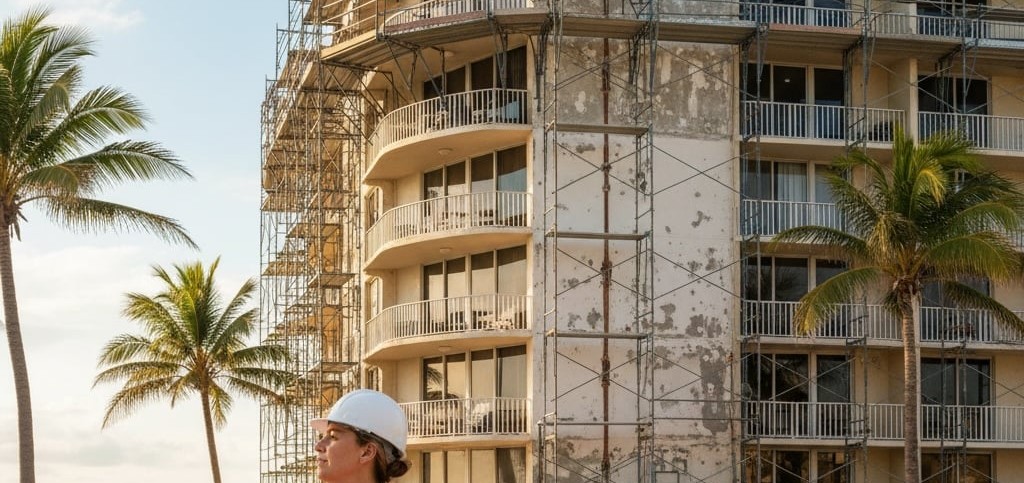
2026 is a pivotal year for Florida condo milestone inspections and Structural Integrity Reserve Studies (SIRS), with key deadlines now reshaping the way real estate professionals evaluate and present condominium properties.
For decades, Florida’s condominium market was the crown jewel of the sunshine state’s real estate landscape—an accessible, low-maintenance gateway to coastal living. As we navigate through 2026, that landscape has fundamentally shifted, with structural safety and long-term funding now central to every serious condo conversation.
The days of “voluntary” structural maintenance and waiving reserves are officially over, replaced by a high-stakes regulatory environment where compliance is mandatory and the financial stakes for owners, buyers, and associations have never been higher.
Following the tragic collapse of Champlain Towers South, Florida’s legislature enacted sweeping changes via Senate Bill 4-D and related follow-up legislation, creating new statewide standards for inspections and reserve funding in multi-story residential buildings.
Now, in 2026, the grace period is effectively over, and real estate professionals must understand these rules to properly advise and protect their clients.
The 2026 Deadline: Milestone Inspections and SIRS
By the end of 2025 and into early 2026, most condominium and cooperative buildings three stories or higher that have reached 30 years of age, or 25 years if located within three miles of the coastline, must complete their required “Milestone Inspections.”
These milestone inspections are performed by licensed engineers or architects and focus on assessing a building’s structural soundness, identifying substantial deterioration, and determining whether repairs or safety measures are needed.
In addition, the “Structural Integrity Reserve Study” (SIRS) is now a non-negotiable requirement for covered associations, designed to quantify the remaining useful life of critical components such as roofs, structural systems, fireproofing, electrical, and plumbing.
SIRS results dictate how much the association must set aside in dedicated reserves to repair or replace these components on time, effectively removing board discretion to underfund or ignore long-term capital needs.
The Financial Impact: The End of “Waiving Reserves”
Historically, many condo boards could vote to waive or reduce reserve funding for long-term projects, allowing associations to keep monthly dues artificially low in the short term.
As of 2026, that strategy is no longer permitted for any items identified in the SIRS, meaning associations must fully fund reserves for structural integrity components and can no longer simply “kick the can down the road.”
For aging buildings that postponed maintenance, the shift from minimal or zero reserves to full funding has triggered substantial financial consequences for unit owners, especially in high-cost coastal markets.
- Massive Special Assessments: Owners in some older communities are seeing one-time assessments ranging from tens of thousands of dollars to well over six figures per unit to address structural repairs revealed during milestone inspections.
- Skyrocketing Monthly Fees: To meet new statutory reserve requirements and ongoing insurance and operating costs, monthly HOA dues have increased sharply in many buildings, sometimes doubling or tripling compared to prior years.
For buyers and sellers, these changes directly impact affordability, financing eligibility, and long-term holding costs, making it critical for real estate professionals to understand each building’s financial and structural profile before drafting offers.
Actionable Advice for Real Estate Professionals
Navigating this “condo milestone crisis” requires a higher level of diligence, documentation, and client counseling than traditional resale transactions in single-family homes.
In practice, that means focusing on three core roles:
- Listing agents: Gather inspections, SIRS, and assessments up front so pricing and disclosures are reality-based.
- Buyer’s agents: Look past cosmetics to FAQ sheets, budgets, audits, and reserve funding status.
- All professionals: Treat structural and financial disclosures as central risk-management tools, not paperwork formalities.
Real estate professionals who build a repeatable process for gathering association information and explaining the risks will stand out as trusted advisors in this complex environment.
Listing Agents
Listing agents should proactively obtain the building’s milestone inspection reports, SIRS documents, and any engineering recommendations before marketing a unit, so that pricing and disclosures reflect current structural and financial realities.
If a building is non-compliant, facing significant required repairs, or underfunded on mandated reserves, traditional financing may be limited or unavailable, which can shift the pool of potential buyers toward cash purchasers or specialized lenders.
Buyer’s Agents
Buyer’s agents must look well beyond finishes and views, carefully reviewing the “Frequently Asked Questions and Answers” (FAQ&A) sheet, association budgets, and the latest financial statements or audits.
If the association has not completed a SIRS, is underfunding required components, or is considering large assessments, clients need a clear picture of future costs before moving forward with inspections or loan applications.
Critical Disclosures
All structural, financial, and association disclosures must be presented, signed, and explained in plain language so that buyers can make informed decisions about the risks and obligations associated with a particular condo building.
In 2026, “I didn’t know about the assessment” or “I didn’t understand the inspection findings” is not a defensible position for a real estate professional, making documentation and communication more important than ever.
Education is the Competitive Edge
The complexity of Florida’s condo laws and building safety requirements in 2026 means that generic real estate knowledge is no longer enough, especially for agents working along the coast or in older high-rise inventory.
Agents who invest in focused “condo compliance” education and stay up to date on legislative changes, inspection standards, and lender guidelines will become the most sought-after advisors in their markets, both by consumers and by referral partners.
Continuing education is now about more than just meeting a renewal requirement; it is a practical tool for protecting clients, managing risk, and safeguarding a long-term career in Florida real estate. Professionals can leverage flexible online CE options, such as OnLine Training’s Florida real estate continuing education courses at https://oltraining.com/real-estate/CE-realestate, to build this specialized knowledge around their schedule.
Stay ahead of the curve: in this new era of Florida real estate, staying informed, documenting carefully, and educating clients clearly are the essential habits that allow professionals to thrive instead of react.