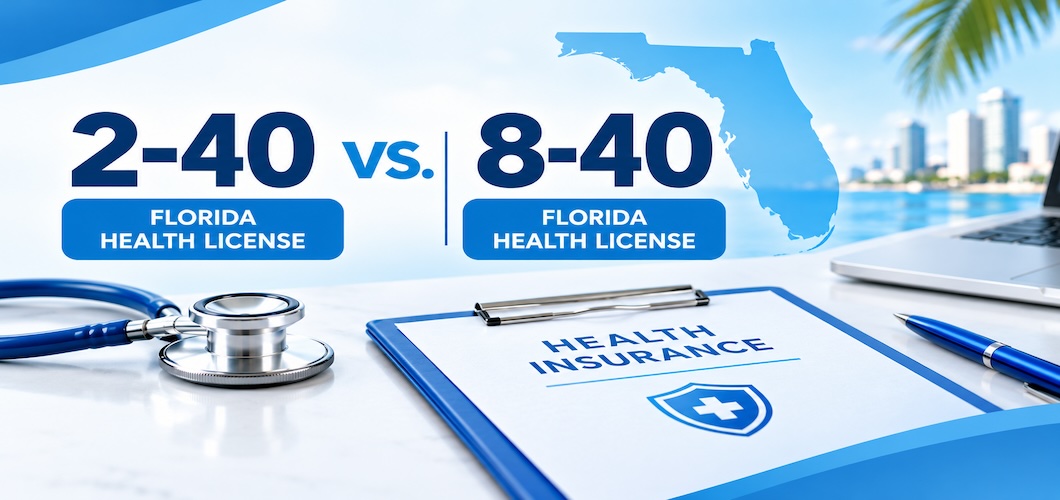
Florida 2-40 vs 8-40 Insurance License: What's the Difference?
If you're exploring a career in health insurance, understanding the difference between Florida's 2-40 and 8-40 insurance licenses is an important first step. Both licenses authorize qualified individuals to work as health insurance agents, but they serve different purposes depending on where you live.
The biggest distinction is simple: the Florida 2-40 license is for resident health insurance agents, while the 8-40 license is for nonresident health insurance agents. Your state of residence and existing insurance license will help determine which option is appropriate for you.
In this guide, we'll explain the differences between the two licenses, outline the requirements for each, and help you determine the next steps toward a career in health insurance.
What Is a Florida 2-40 Health Insurance License?
The Florida 2-40 license is the Resident Health Agent license. It allows qualified Florida residents to conduct authorized health insurance business after meeting the state's licensing requirements and obtaining the appropriate appointment.
Health insurance agents may help individuals and eligible groups explore coverage options, explain insurance benefits, and apply for health insurance products within the scope of their authorization.
A 2-40 license may be a good option for individuals interested in careers involving:
- Individual health insurance sales
- Health insurance agency work
- Health coverage education and customer support within an authorized role
- Health insurance enrollment and policy servicing, where properly licensed and authorized
- Building a career focused on health insurance products
Before applying, prospective agents should review the Florida Department of Financial Services' current eligibility requirements and determine which pre-licensing education pathway applies to them.
What Is a Florida 8-40 Health Insurance License?
The Florida 8-40 license is the Nonresident Health Agent license. It is intended for eligible individuals who live outside Florida and want authority to conduct health insurance business in Florida.
Unlike the resident 2-40 license, the 8-40 generally requires applicants to hold the corresponding health insurance agent license in their home state. Applicants must continue to meet the applicable home-state licensing requirements to maintain their Florida nonresident license.
The 8-40 may be appropriate for insurance professionals who:
- Live in another state and already hold a health insurance license there
- Want to expand their insurance business into Florida
- Work with an agency serving clients across multiple states
- Need Florida nonresident authority for the health insurance business they conduct
The 8-40 is not simply an alternative course for Florida residents. It is a nonresident license with different eligibility requirements.
Florida 2-40 vs. 8-40: Key Differences
| Feature | 2-40 Health License | 8-40 Health License |
|---|---|---|
| License classification | Resident Health Agent | Nonresident Health Agent |
| Who it's for | Eligible Florida residents | Eligible residents of other states |
| Home-state health license required | Not applicable to a Florida resident applying for this license | Generally required in the applicant's state of residence |
| Pre-licensing course | Generally requires an approved 40-hour health insurance pre-licensing course or an eligible approved designation pathway | Generally does not require Florida's resident pre-licensing course when the applicant qualifies through an equivalent home-state license |
| Florida state examination | Required unless an applicable exemption applies | Generally not required for an eligible nonresident applicant who meets the licensing requirements |
| Primary purpose | Conduct authorized health insurance business as a Florida resident agent | Conduct authorized health insurance business in Florida as a nonresident agent |
Important: Licensing requirements, exemptions, and application procedures can depend on an applicant's circumstances. Verify your eligibility directly with the Florida Department of Financial Services before enrolling in a course or submitting an application.
How to Get a Florida 2-40 Health Insurance License
If you live in Florida and want to become a health insurance agent, the 2-40 license may be the right starting point. Follow these general steps.
Step 1: Meet the Basic Eligibility Requirements
Florida's resident health license requirements generally include the following:
- Be at least 18 years old
- Be a resident of Florida
- Meet the applicable citizenship or work-authorization requirements
- Not hold a resident insurance license in another state
- Meet the applicable qualifications established by the Florida Department of Financial Services
Step 2: Complete the Required Pre-Licensing Education
Most applicants pursuing the 2-40 license must complete an approved 40-hour health insurance pre-licensing course. Certain department-approved professional designations may provide an alternative qualification pathway.
Pre-licensing education helps prepare prospective agents to understand health insurance concepts, terminology, policy provisions, and applicable insurance laws.
Choosing a course provider that offers clear course materials, flexible study options, and responsive student support can make the licensing process more manageable.
Ready to get started? Explore OnLine Training's Florida insurance education options to find a course that fits your licensing goals.
Explore OLT's Florida Real Estate and Insurance Courses
Step 3: Apply for Your License
After satisfying the applicable education or designation requirements, submit your license application through the Florida Department of Financial Services. Complete the required application information and pay the applicable fees.
Review the department's current fingerprinting instructions to determine whether fingerprinting is required for your application.
Step 4: Pass the State Examination
The standard resident 2-40 licensing pathway requires applicants to pass the applicable Florida state examination unless an exemption applies.
Review the current examination requirements and available testing information before scheduling your exam.
Step 5: Obtain the Appropriate Appointment
Receiving a license does not automatically authorize you to conduct every type of insurance transaction. Florida generally requires agents to hold the appropriate appointment before transacting insurance business.
Make sure you understand the appointment requirements that apply to your role and the health insurance products you intend to offer.
How to Get a Florida 8-40 Health Insurance License
If you live outside Florida and already hold a health insurance license in your home state, obtaining a Florida 8-40 license may be more straightforward than pursuing a resident license.
Step 1: Confirm Your Home-State License
Applicants generally must hold an active resident health insurance agent license in their state of residence. The home-state license must support the same line of authority requested in Florida.
Step 2: Submit Your Nonresident Application
Apply through the Florida Department of Financial Services using the applicable nonresident licensing process. Provide the required information and pay the applicable fees.
Step 3: Review Any Additional Requirements
Although eligible nonresident applicants generally do not need to repeat Florida's resident pre-licensing course or examination, you should verify the current requirements for your individual situation.
Step 4: Obtain the Appropriate Appointment
Before conducting health insurance business in Florida, confirm that you have the required appointment and authorization for the products you intend to offer.
What Can You Do With a Health Insurance License?
Both the 2-40 and 8-40 licenses can support career opportunities in health insurance, subject to the applicable licensing, appointment, and product-authority requirements.
Potential career paths include:
- Health insurance agent: Help eligible customers evaluate coverage options and apply for authorized health insurance products
- Health insurance sales professional: Develop customer relationships and build a business serving individuals or eligible groups
- Insurance agency professional: Work with an agency that offers health insurance products and services
- Independent insurance professional: Explore opportunities to work with authorized insurers or agencies, subject to applicable contracts and appointments
- Multistate insurance professional: For qualified nonresident agents, obtain the appropriate licenses to expand into additional markets
Your responsibilities will depend on your employer, insurer appointments, product authority, and applicable state and federal regulations.
Can You Sell Life Insurance With a 2-40 or 8-40 License?
A health insurance license does not automatically authorize you to sell every type of life insurance product.
If your career goals include selling life insurance in addition to health insurance, consider whether a combined life and health license is more appropriate.
Florida's 2-15 license is the resident Life, Health, and Variable Annuity Agent license, while the 8-15 is the corresponding nonresident license. These licenses differ from the 2-40 and 8-40 health-only licenses.
Choosing the right license at the beginning can help you align your education with your long-term career goals.
Which License Should You Choose?
The right choice depends primarily on where you live and the type of insurance business you want to conduct.
Choose the 2-40 If:
- You are a Florida resident
- You want to pursue a career focused on health insurance
- You are prepared to complete the applicable resident licensing requirements
- You want to begin working toward the Florida health insurance licensing pathway
Consider the 8-40 If:
- You live outside Florida
- You already hold the appropriate health insurance license in your home state
- You want to expand your authorized insurance business into Florida
- You meet Florida's nonresident licensing requirements
If you live in Florida but want to work with customers in other states, you may need to obtain nonresident licenses in those states. The 8-40 is not the resident license for Florida applicants.
Start Your Florida Insurance Licensing Journey With OLT
Choosing the right insurance license is an important step toward building a career in the insurance industry. Whether you're entering the field for the first time or expanding your existing insurance business, understanding your licensing options helps you make an informed decision.
OnLine Training (OLT) provides online insurance education designed to help students work toward their professional goals. With flexible learning options and a focus on student support, OLT helps make insurance education more accessible to busy adults.
Explore OLT's Florida insurance pre-licensing catalog to learn more about available courses and find an education pathway that matches your goals.
Explore the Florida 2-40 Health Insurance Pre-Licensing Course and start working toward your insurance career.
Build your foundation with Florida approved online insurance education from OLT.
ENROLL TODAY: Florida 2-40 Health Insurance Pre-Licensing CourseFrequently Asked Questions About Florida's 2-40 and 8-40 Licenses
Is the 2-40 license the same as the 8-40 license?
No. Both are health insurance agent licenses, but the 2-40 is for Florida residents and the 8-40 is for eligible nonresidents who meet Florida's licensing requirements.
Does the Florida 2-40 license require a pre-licensing course?
Generally, yes. The standard resident pathway requires an approved 40-hour health insurance pre-licensing course, although certain approved professional designations may provide an alternative qualification pathway.
Do I need to take a state exam for the 8-40 license?
Eligible nonresident applicants generally do not need to take Florida's resident licensing examination when they meet the applicable nonresident requirements. Confirm your eligibility with the Florida Department of Financial Services.
Can I apply for an 8-40 license if I live in Florida?
The 8-40 is intended for nonresident applicants. If Florida is your state of residence, the 2-40 is generally the relevant health-only license to investigate.
Can I hold a 2-40 and a 2-15 license?
These are distinct license classes with different lines of authority. The 2-40 covers health insurance, while the 2-15 covers life, health, and variable annuity products. Review Florida's requirements to determine which license or licenses are appropriate for your intended business.
Where can I verify Florida insurance licensing requirements?
Visit the Florida Department of Financial Services licensing qualifications page for official information about license classes, eligibility, education, examinations, and application requirements.
Disclaimer: This article is intended for general educational purposes and is not legal or regulatory advice. Licensing requirements may change. Always verify current requirements with the Florida Department of Financial Services before enrolling in a course or applying for a license.