What Is a 4-Point Inspection, and Do I Need One?
If you're buying an older home in Florida or shopping for homeowners insurance, you've probably heard the term 4-point inspection. Many homeowners are surprised to learn that while the inspection isn't required by the state, it is required by many insurance companies before they'll issue or renew a homeowners insurance policy.
What Is a 4-Point Inspection?
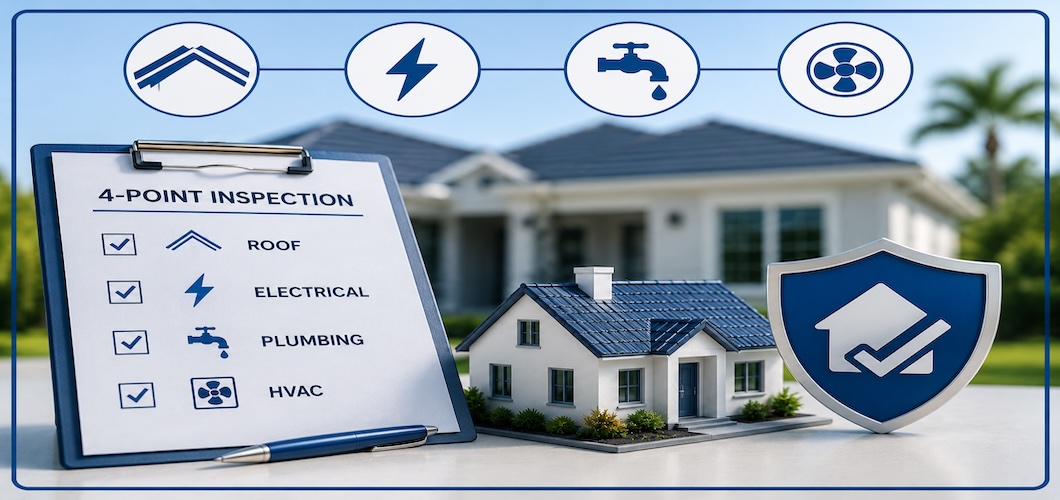
A 4-point inspection is a limited home inspection that focuses on the four major systems most likely to generate costly insurance claims.
Unlike a complete home inspection, this evaluation only examines:
- Roof
- Electrical system
- Plumbing system
- Heating, Ventilation and Air Conditioning (HVAC)
Insurance companies use the inspection to determine whether these critical systems are in acceptable condition and present an acceptable level of risk.
Why Do Insurance Companies Require One?
As homes age, the likelihood of expensive repairs increases. Older roofs, aging plumbing, outdated electrical systems, and worn HVAC equipment can all result in costly insurance claims.
Rather than making decisions based solely on a home's age, insurers use a 4-point inspection to evaluate the actual condition of these important systems.
A well-maintained older home may be viewed more favorably than a newer home with neglected maintenance.
When Is a 4-Point Inspection Required?
Although every insurance company has its own underwriting guidelines, most Florida insurers require a 4-point inspection when a home is between 20 and 30 years old or older.
You may need one when:
- Buying an older home
- Changing insurance companies
- Applying for homeowners insurance for the first time
- Renewing your current homeowners policy
What Does the Inspector Evaluate?
Roof
The inspector examines:
- Roof age
- Visible damage
- Signs of leaks
- Overall condition
- Estimated remaining useful life
Because roof condition plays such an important role in homeowners insurance, many insurers place significant emphasis on this portion of the inspection.
If you'd like to learn more about roof age and your insurance rights, read our related article: Can My Insurance Company Drop Me Because of My Roof's Age?.
Electrical System
The inspector reviews:
- Main electrical panel
- Wiring type
- Circuit breakers
- Visible safety hazards
Certain outdated electrical systems may require upgrades before coverage can be issued.
Plumbing System
The plumbing inspection includes:
- Supply pipes
- Drain lines
- Water heater
- Visible leaks
- Overall condition
Many insurance companies pay close attention to older plumbing materials such as polybutylene piping, which has a history of premature failure.
HVAC System
The inspector also evaluates:
- Heating and cooling equipment
- Age of the system
- Operating condition
- Visible deterioration
An aging HVAC system doesn't automatically prevent coverage, but serious defects may require repairs before a policy is issued.
Can a Failed Inspection Affect My Insurance?
Yes. If the inspection identifies significant problems with any of the four major systems, the insurance company may:
- Decline coverage
- Require repairs before issuing a policy
- Request additional documentation
- Delay coverage until deficiencies are corrected
Fortunately, many homeowners simply complete the recommended repairs and submit updated inspection documentation.
Who Can Perform a 4-Point Inspection?
Insurance companies generally require the inspection to be completed by a licensed professional, such as:
- Licensed Home Inspector
- Licensed General Contractor
- Licensed Professional Engineer
- Licensed Architect
Always confirm your insurance company's requirements before scheduling an inspection.
How Much Does a 4-Point Inspection Cost?
Most Florida homeowners pay between $75 and $200, depending on location and the inspection company.
Many inspectors also offer discounted packages when combined with a Wind Mitigation Inspection, which could help reduce your homeowners insurance premium.
Can a 4-Point Inspection Save You Money?
Although the inspection itself doesn't provide a discount, it can:
- Help you qualify for homeowners insurance
- Demonstrate your home has been properly maintained
- Speed up the underwriting process
- Identify repairs before they become costly claims
Understanding Florida's Insurance Market
Questions about inspections often arise when homeowners receive renewal notices or hear about changes in Florida's insurance market.
Several insurers have recently announced premium reductions, while other homeowners continue seeing higher costs because of replacement values, home age, location, and property condition.
To better understand what's happening across the state, read our related article:
Is Florida Homeowners Insurance Actually Getting Cheaper?
The article explains why some homeowners are seeing lower premiums while others are not and what factors insurance companies consider when determining rates.
The Bottom Line
If your Florida home is approximately 20 to 30 years old or older, there's a good chance your insurance company will require a 4-point inspection before issuing or renewing your homeowners insurance policy.
The inspection focuses on your roof, electrical system, plumbing, and HVAC the four systems that play a major role in determining your home's insurability.
Keeping these systems properly maintained not only improves your chances of obtaining affordable homeowners insurance but also helps protect one of your biggest investments.
Interested in Learning More About Florida Insurance?
Whether you're a homeowner looking to better understand insurance or you're considering a career in the insurance industry, OLT Training offers Florida approved online insurance licensing courses to help you succeed.
Explore Florida Insurance Courses