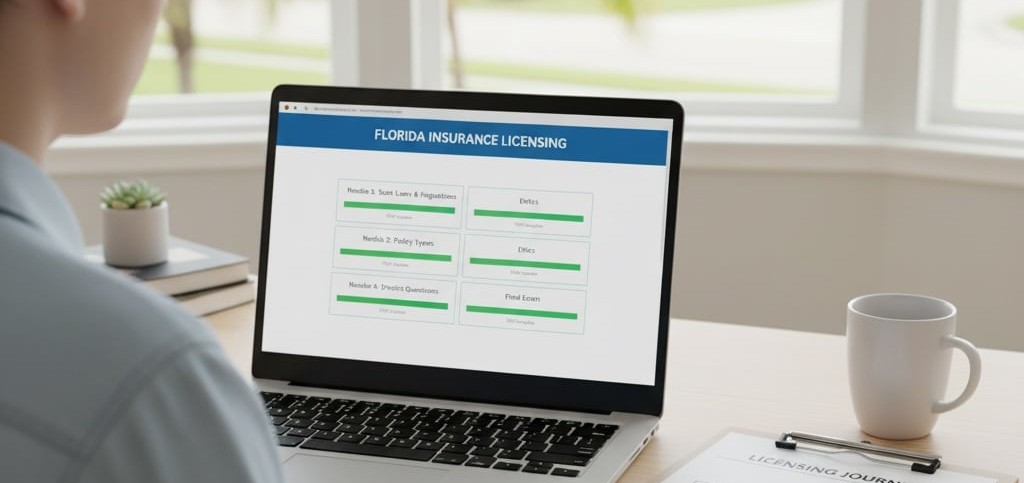
You want a Florida insurance license so you can increase your income, gain flexibility, and build a real career — not get lost in confusing DFS rules and random course options.
This guide walks you through each step and links you directly to the right Florida-approved online course so you can move from "interested" to "licensed" as quickly and safely as possible.
Most OLT students are exam-ready in one or two weeks of focused study. Your license could be active within 30 days from right now.
Step 1: Pick the Right Florida Insurance License
Before you enroll in a course, decide which license fits the work you want to do and the products you want to sell in Florida.
DFS offers several common license types, including 2‑15 Health & Life (including Annuities & Variable Contracts), 2‑14 Life & Variable Annuity, 2‑20 General Lines, 20‑44 Personal Lines, 2‑40 Health, and 6‑20 All‑Lines Adjuster.
OnLine Training (OLT), a Florida‑approved provider, organizes its online catalog using these same license lines, which makes it easy to match your career goal to the exact course you need.
40 hr 6‑20 All‑Lines Accredited Claims Adjuster (ACA) Designation
(waives state exam)
License outcomeEntry level adjuster (property, auto, liability, and CAT claims).
Best for
Future staff or independent adjusters who want to enter the field quickly and may later pursue the 3‑20 Public Adjuster license.
View 6‑20 Adjuster Designation Course
40 hr 4‑40 Registered Customer Service Representative (RCSR) Designation
(waives state exam)
License outcomePrepares you to support general lines and personal lines clients in an agency setting.
Best for
New entrants who want a faster path into the industry in service, inside sales, and policy maintenance roles.
View 4‑40 RCSR Designation Course
20‑44 Personal Lines
What you can sell
Auto, home, renters, and personal liability (no commercial).
Best for
Agents serving personal property and casualty clients.
60 hr 20‑44 Personal Lines License Course
If you are still not sure which license to choose, use these quick comparison resources:
When you know your license target, you are ready to enroll in the matching pre‑licensing course and start your Florida licensing journey.
Step 2: Follow the Florida Licensing Process
Once you know your license line, it is time to follow the DFS checklist so you do not miss anything that could delay your approval.
In most cases, you will complete a pre‑licensing course, submit fingerprints, apply for your license through MyProfile, and then pass the state exam for your line of authority.
OLT’s online courses are self‑paced, give you several months of access, and are designed to meet Florida content requirements so you can qualify for the exam and walk in feeling prepared.
-
Complete a state‑approved pre‑licensing course.
Enroll from the main pre‑licensing page:
Florida Insurance Pre‑Licensing Courses Online
-
Get fingerprinted
.
DFS requires fingerprints through approved vendors and does not allow you to reuse prints from other agencies, so plan this step early.
-
Apply for your license
.
Log in to your DFS MyProfile account to submit the application, pay fees, and monitor your status online.
-
Schedule and pass the state exam
.
After you finish the course, schedule your exam with Pearson VUE and follow their rules for test centers or remote proctoring.
By the end of this step, you should have a completed course, fingerprints, an active application, and a scheduled exam date on your calendar.
Step 3: Understand License vs. Appointment
Having a license is not enough by itself; Florida only allows you to “transact insurance” when you hold both a current license and an active appointment.
DFS defines transacting insurance to include solicitation, preliminary negotiations, execution of insurance contracts, and servicing existing policies, and prohibits acting as or advertising as an agent or adjuster without both pieces in place.
Insurance companies and certain license holders use the state’s eAppoint system to submit and manage appointments, and roles such as customer representatives, public adjusters, surplus lines agents, and unaffiliated agents must follow specific appointment rules.
Once your license is issued and you are appointed, you can begin helping clients and earning commissions under your chosen line of authority.
Step 4: Go Straight to the Right Course Category
Instead of hunting around the site, use these direct links to jump into the Florida course category that matches your goal.
Life & Health Insurance Courses
If your plan is to sell life insurance, health insurance, or both, start with the Life & Health catalog and choose the exact license level you need.
-
Florida Life & Health Pre‑Licensing – Course Catalog
One central hub for all Florida Life & Health pre‑licensing options, including 2‑15, 2‑14, and 2‑40, so you can quickly match your license goal with the correct state‑approved course.
-
Florida 2‑15 Life, Health & Variable Annuity License Course Online
A comprehensive 60‑hour pre‑licensing course that covers life, health, and variable annuities and is built to meet Florida’s 2‑15 requirements and prepare you for the state exam.
-
Florida 2‑14 Life & Variable Annuity Pre‑Licensing Course Online
A focused 30‑hour program for the Florida 2‑14 Life & Variable Annuity license, emphasizing life concepts, annuities, and suitability so you can sit for the exam confidently.
-
Florida 2‑40 Health Only License Course Online
A targeted pre‑licensing course for the Florida 2‑40 Health license, concentrating on medical expense, disability, group health, and related regulations for students who want to specialize in health coverage.
Personal Lines Insurance Courses
If you prefer to focus on auto, home, renters, and personal liability coverage, the 20‑44 Personal Lines license is usually the best place to start.
General Lines and Adjuster Courses
If you want broader authority in property and casualty or to work as an adjuster, explore General Lines and adjuster training.
After you choose your course and enroll, you are officially on the path from first questions to fully licensed Florida insurance professional.
Step 5: Plan for Florida Continuing Education
After you are licensed, Florida agents and adjusters must complete continuing education (CE) on a regular schedule, so it pays to plan this from day one instead of waiting for a last‑minute deadline.
DFS normally uses a two‑year CE cycle tied to the last day of your birth month, with specific hour requirements and law and ethics updates that depend on license type and time in the industry.
OLT offers state‑approved CE bundles and individual courses online so you can complete all of your required hours from home or the office without disrupting your workday.
Florida Insurance Licensing FAQs
Do I have to take a pre‑licensing course to get a Florida insurance license?
For most resident licenses, DFS requires you to complete a state‑approved pre‑licensing course before you can sit for the state exam, and the required hours vary by license type.
OLT provides Florida‑approved online pre‑licensing for major lines like 2‑15, 2‑14, 2‑20, 20‑44, and 2‑40 so you can meet this requirement without stepping into a classroom.
How long does a Florida insurance pre‑licensing course take?
Course length is set by Florida; for example, the 2‑15 Life, Health & Variable Annuity course is 60 hours and the 2‑14 Life & Variable Annuity course is 30 hours.
Because OLT courses are self‑paced and fully online, many students finish in about one week of focused study while still keeping several months of access in case they need extra review time.
Can I take my Florida insurance course and exam completely online?
Your education can be 100% online through providers like OLT, which offer self‑paced courses you can access from any device.
The state exam is arranged through DFS’s contracted testing vendor, and while you schedule and receive scores online, you still need to follow the vendor’s rules for test centers or remote proctoring.
What happens if I have a prior criminal record?
DFS reviews your criminal history as part of the licensing process and may approve or deny your application based on Florida statutes and the nature and timing of any offenses you disclose.
You must provide accurate information and complete fingerprinting through DFS‑approved channels so the department can evaluate your eligibility.
How often do I need Florida insurance continuing education?
Florida agents and adjusters usually complete CE on a two‑year cycle tied to the last day of their birth month, with specific hour requirements and law and ethics updates based on license type and time in the industry.
OLT’s online CE catalog includes full bundles and single‑course options so you can finish all of your required hours in one place and avoid last‑minute scrambling.
⭐⭐⭐⭐⭐ "The course gave me the confidence to pass my 2-20 exam, even though I've never been a strong test taker."
— Yasmine, Florida 2-20 General Lines
You know exactly what to do next.
Pick your Florida insurance license, enroll in the matching course, and follow this guide step by step.
Most students are exam-ready within one week of focused study. Your license could be live within 30 days.
Enroll in Your Pre-Licensing Course Now →
Already licensed? Complete your required CE hours online — browse Florida CE courses here.